Hello, it’s Morio. Today, I’d like to talk about the “Planetary Reducer” used in the feeding unit of our Coiling Machine SPC-50 and its distinctive features.
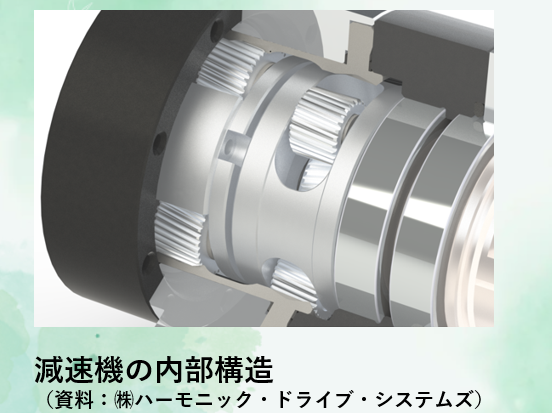
The role of a “Reducer” is to convert high-speed rotation, such as that of a servo motor, into the required speed and torque. This small yet crucial mechanical component consists of elements such as input shafts, gears, output shafts, bearings, as well as lubrication mechanisms and housings.
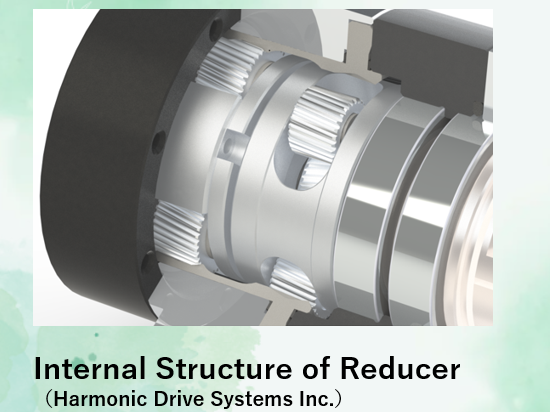
The planetary reducer used in the SPC-50 is a gearhead type known for its high precision and rigidity. This reducer adopts helical gears (a type of gear where the teeth are cut at an angle to the face of the gear), resulting in approximately 30% increased torque compared to conventional reducers and significantly reduced backlash (gear play), achieving high performance.
The primary feature of a planetary reducer is its arrangement where small gears (planet gears) surround a central large gear (sun gear). This unique configuration enables high reduction ratios and efficiency. With the use of helical gears, the contact area between gears increases, enhancing strength and ensuring smooth rotation. Additionally, this design excels in noise reduction.
However, we have to know that despite improvements in performance, it’s impossible to completely eliminate backlash (gear play). This is due to factors such as lubrication and thermal expansion. Our planetary reducer minimizes backlash to an extremely small “3 minutes.” This means that the angle until gears make new contact when changing rotation direction is a mere 0.05 degrees, ensuring high precision.
The accuracy of the feeding mechanism significantly impacts the precision of the springs. I hope this helps you understand the mechanism behind the precise feeding of our SPC-50. I would be delighted to receive any questions or feedback on this matter or any other.












 いて、ご理解頂ければ幸いです。この件に関わらず、ご質問やご意見を頂ければ、うれしく思います!