









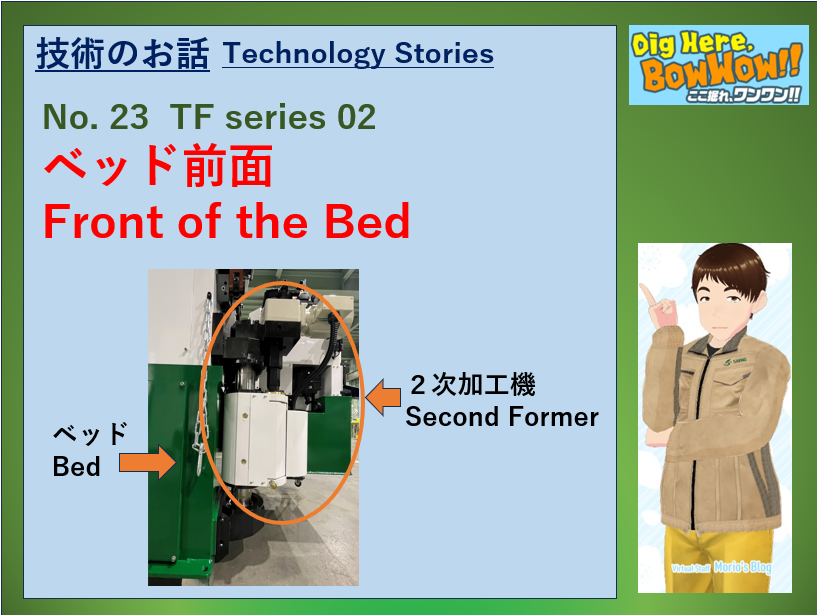
No.24 TFシリーズ02 ベッドの前面
もりおです!
ぼくのブログ「ここ掘れ、ワンワン!!」のTF編が
当社のYoutubeサイトでも紹介されています。
https://www.youtube.com/@Shinko-SNS
「投稿」に掲載されます。
数多くの加工動画も掲載されていて、登録者数もアクセス数も、業界1位です。
皆様も、是非見てくださいね。
TF詳細編。では、ベッドから見ていきましょう。
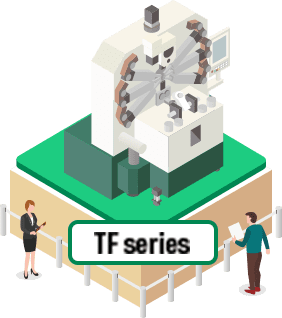
前回も触れましたが、引張ばね加工機TFシリーズのベッドの大きな特長の1つは、
前面に2次加工機が装着されることです。
2次加工機は、フレームとベッドから、それぞれブラケットで接続されます。
ここで大切なのは、次の2点です。
・2次加工機の重量を支えること
(ばね加工の自動運転中には、2次加工機そのものは地面と接触しなくなります)
・2次加工機の水平を保つこと
(加工フレームが乗る上面の水平度も同じように重要です)
今回は、2つ目の2次加工機を水平に保つことに焦点を当てましょう。
そう、水平を保つということは、接続面の垂直性を保つということです。
TFのベッドの外側は箱型構造で、鉄板を溶接して製作されます。
2次加工機が装着される前面の精度はすごいですよ。
何と、ベッドの上部と底の垂直的なずれは、100分の5mm以下です。
(この精度は、ベッドの上のフレームについても同様です。)
ベッドの素材は、一般構造用圧延鋼材のSS400という鉄板を使います。
強度がある、熱変形しにくい、溶接しやすいというメリットがあります。
また、厚みは厚いほどいい訳でもなく、厚過ぎると変形しやすくなるので、
強度との兼ね合いが設計者の腕の見せ所です。
10mmまで扱う大型機MG100では、この材料をさらに熱処理して強化したものを使います。
熱処理すると、材料がより硬くなり、切削加工がとても大変になります。
高級なピアノは、長い時間をかけて、材料の木材を完全に乾燥させて、変形しないようにしてから、
部材に加工するそうですが、それに近いですね。
このベッド用の鉄板に限りませんが、当社機で使う部品の精度は、
「繰り返し精度(高精度なばねを同じ形状で生産し続ける技術)」実現の根源です。
協力企業さんにはよく、「新興機械工業の部品作るのは大変だよ」と言われます。
でも、皆様、言っている時、とっても笑顔で誇らしげなんですよね。
そんな協力企業の方々は、本当に当社の技術を支える大切なパートナーであり、宝です。
ぼくも、もっとたくさん加工技術のことも教えて欲しいと思います。
ここでも発信していきますね。
当社で、製造組立を担当しているYさんもすごいですよ。
ベッドやフレームの垂直部分の上下で100分の5mm以上ずれていると、
組み立てている時に、感覚でわかるんだそうです。
人間ってすごいですよね。
ちなみに、当社では、「セル生産」方式を採用していて、
1台1台、製造の組立担当者が機械を組み立てています。
社長は、
「製造現場の仕事は、組み立てることじゃなくて、品質を最終的に実現することだ」
と言っていますが、
お客様に、長く使ってもらうためには、1つ1つ丁寧に、「ものづくり」することが大切ですよね。
※本ブログは、生成AIを活用して作成しています。
No.24 TF series 02 Front of the Bed
Hi, it’s Morio!
My blog series, “Dig Here, Bowwow!!”, specifically the TF edition, is now being featured on our company’s YouTube site!
👉 Shinko-SNS YouTube Channel
You’ll find it under the “Posts” section.
The channel also features many processing videos, and both our subscriber count and views are ranked number one in the industry in Japan!
I’d love for you to check it out too!
TF Details Edition – Let’s Start with the Bed!
As I mentioned in the previous post, one of the key features of the TF series extension spring processing machines is the installation of a second former on the front of the bed.
The second former is connected to the frame and bed using brackets. Here, two points are crucial:
Supporting the Weight of the Second Former
During automatic spring processing, the Second Former is lifted off the ground and supported entirely by the machine itself.
Maintaining the Levelness of the Secondary Unit
The flatness of the upper surface, where the processing frame is mounted, is equally important.
Focus on Keeping it Level!
This time, let’s focus on the second point—maintaining the levelness of the second former.
Keeping it level essentially means ensuring that the connecting surfaces remain vertical.
The TF bed has a box-shaped structure, made by welding steel plates together.
And the precision of the front surface—where the second former is attached—is incredible!
The vertical deviation between the upper and lower parts of the bed is less than 0.05mm (.002″)!
(And this same precision applies to the frame mounted on the bed too!)
The bed is made from material SS400, a general structural rolled steel plate.
This material is strong, resistant to thermal deformation, and easy to weld.
However, when it comes to thickness, thicker doesn’t always mean better.
If it’s too thick, it can actually deform more easily.
So, finding the perfect balance between strength and thickness is where our design engineers really shine!
For larger machines, like the MG100 that handles materials up to 10mm (.393″) , we use heat-treated materials for even greater strength.
But heat-treating makes the material harder, which makes machining much more challenging.
It’s similar to crafting a high-end piano—where they spend a long time carefully drying the wood to prevent any deformation before processing it.
We approach our machine bed materials with the same care.
Precision is Everything!
And it’s not just the bed. The precision of every single part used in our machines is the foundation for achieving “repeatability”—a key factor in consistently producing high-precision springs with same shapes.
Our partner companies often say:
“Making parts for Shinko Machinery is tough!”
But you know what?
Whenever they say that, they’re smiling so proudly.
They truly are our essential partners, supporting our technology and contributing to our success. They’re a real treasure.
I’d love to learn more about machining techniques from them and share more insights with you here too!
The Magic of Skilled Hands
Mr. Y, who is in charge of manufacturing and assembly at our company, is amazing.
If the vertical alignment of the bed and frame deviates by more than 0.05mm (.002″), he can sense it by feel during assembly!
Isn’t it incredible what skilled human senses can detect?
By the way, we use a “cell production” system, meaning that each machine is assembled individually by a dedicated assembly expert.
Our president often says:
“The job of manufacturing isn’t just to assemble machines, it’s about ultimately ensuring quality.”
To make sure our machines can be used by customers for many years, every step of the process requires careful, dedicated craftsmanship.
And that’s something we value and strive for.
I would like you to looking forward to my next blog and Stay tuned!
*This blog is made with the help of generative AI.